




The Legacy of Czech Glass: Why Bohemian Craftsmanship Rules the World
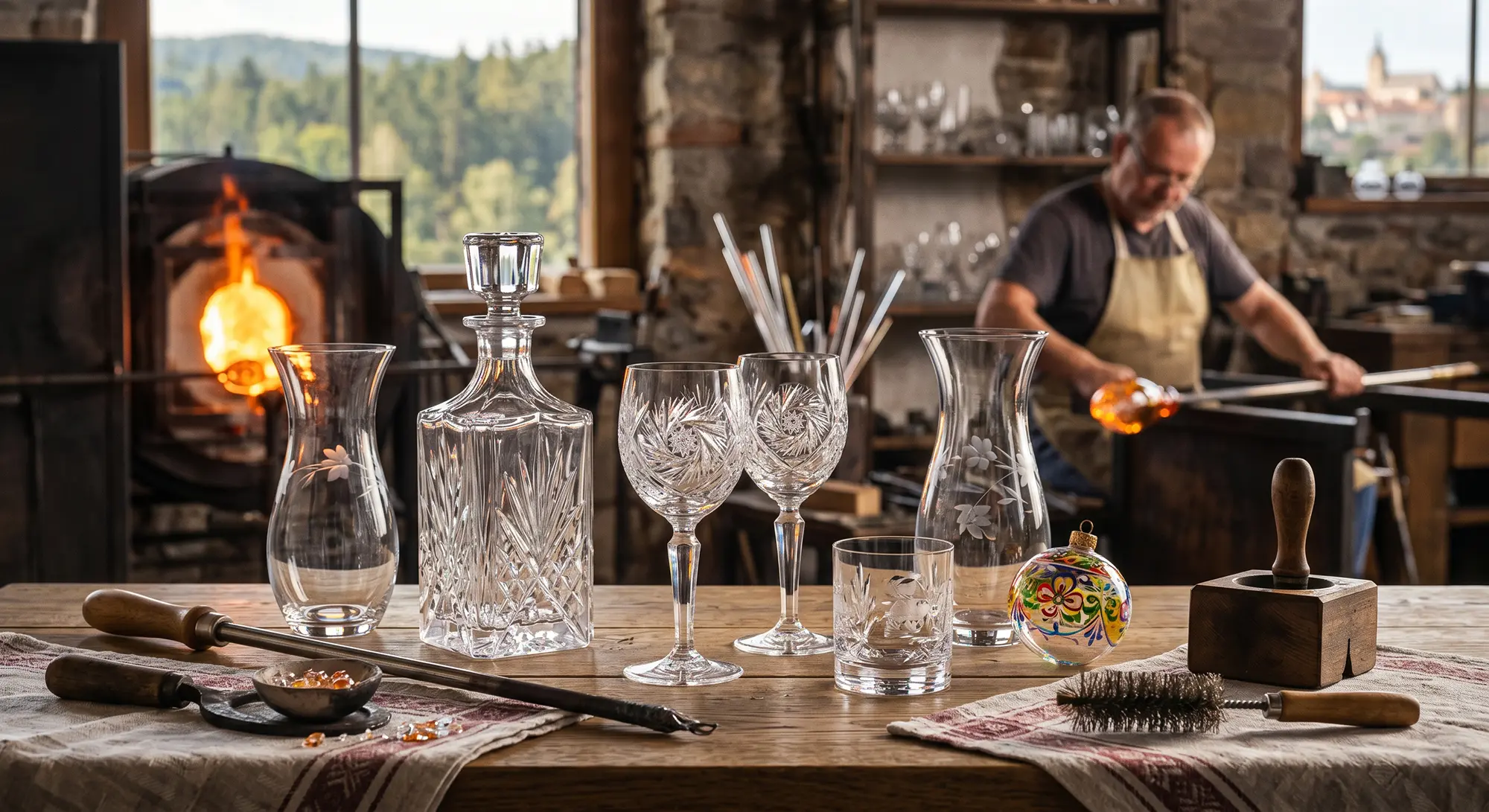
Czech glass and Bohemian crystal hold a legendary status in the world of design and craftsmanship. For centuries, these exquisite creations have adorned royal palaces, luxury hotels, and elegant homes worldwide. But what exactly lies behind this global reputation, and why is "Czech glass" considered a benchmark of supreme quality?
A Rich History: From Medieval Kilns to Royal Courts
The tradition of glassmaking in the Czech lands (historically known as Bohemia) dates back to the 13th century. It began in the dense forests of the border regions, where abundant timber and high-quality quartz sand provided the perfect conditions for early glassworks.
The turning point came in the 17th century when Bohemian glassblowers developed a unique recipe for clear, stable potassium-lime glass. This new material was incredibly strong and ideal for intricate engraving and cutting. Before long, Bohemian crystal began to outshine the famous Venetian glass from Murano, becoming the preferred choice for European nobility, including King Louis XV of France and Empress Maria Theresa of Austria.
What Makes Czech Glass So Special?
The secret to its enduring appeal is a combination of natural resources and skills passed down through generations.
Pure Silica Sand: The Czech Republic is home to incredibly pure quartz sand, which gives the glass its characteristic clarity and brilliance.
Masterful Hand-Blowing: Every authentic piece is hand-blown by skilled artisans. Shaping molten glass at extreme temperatures requires immense physical strength, precision, and years of practice.
Intricate Cutting and Engraving: Czech decorative techniques, especially deep hand-cutting, are celebrated worldwide for their geometric perfection and ability to capture light.
How to Recognize Authentic Czech Glass
Due to the high demand for Bohemian crystal, the market is flooded with mass-produced imitations. To ensure you are buying the real thing, look for these key indicators:
Weight and Light Refraction: Genuine Czech glass (especially lead crystal) is noticeably heavier than standard glass. When held up to the light, it acts as a prism, splitting light into beautiful rainbow spectrums.
The "Ring" Sound: If you gently tap the rim of a crystal glass, it will produce a clear, sustained, bell-like ring. Cheap glass or plastic imitations only make a short, dull thud.
Signs of Craftsmanship: Tiny, almost imperceptible variations in thickness or a minor bubble are not flaws; they are the hallmarks of genuine hand-blown glassware.
Bring a Piece of Czech Heritage into Your Home
Investing in authentic Czech glass is more than just buying tableware or decor—it is owning a piece of history. These timeless works of art retain their beauty and value for generations.
At AA Czech Glass, we are dedicated to preserving this rich heritage. Every item in our collection is sourced directly from skilled Czech glassmakers, ensuring you receive only the finest, authentic Bohemian craftsmanship.